
Knob-and-Tube Wiring in Older Boston Homes: What Owners Should Know
· By Alexandre Afonso
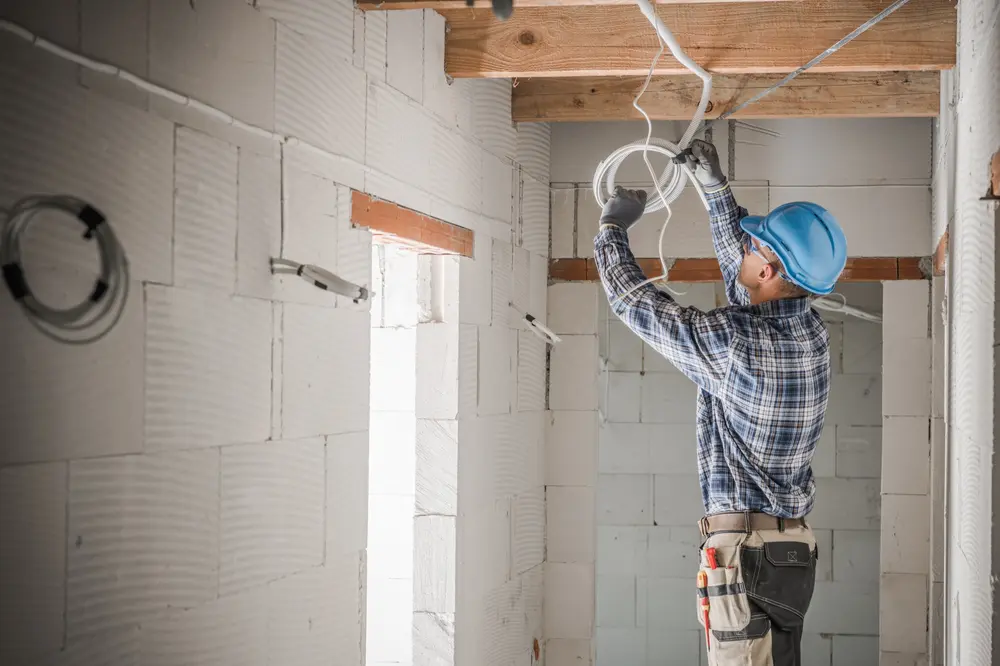
If you own a home built before the 1950s in Greater Boston, there is a good chance some original knob-and-tube wiring is still hiding in the walls, attic, or basement. It was the standard wiring method in the United States for decades, and a lot of it is still quietly carrying power in homes around Cambridge, Somerville, and the rest of the region.
Knob-and-tube (often shortened to K&T) is not automatically an emergency. Plenty of it has worked for a century. But it was designed for a very different era of electrical use, and its age and design create real limitations that every owner of an older home should understand before it becomes a surprise during a renovation, an insurance review, or a sale.
This guide covers what knob-and-tube is, the specific risks, how it affects insurance and resale, and how to think about rewiring. Because our electrical work is handled in-house, we can inspect what you actually have, tell you straight whether it is a problem, and plan a rewire that fits with any other work you are doing on the house.
What knob-and-tube wiring actually is
Knob-and-tube is a two-wire system. The hot and neutral run as separate wires, held away from framing by ceramic "knobs" and passed through joists inside protective ceramic "tubes." That air gap was the insulation strategy, and in an open, undisturbed attic it worked reasonably well.
The key thing to understand is what it lacks. There is no ground wire, so your three-prong outlets over K&T are not truly grounded. The conductors are insulated with cloth and rubber that becomes brittle and crumbles with age. And it was never designed for the number of appliances, electronics, and continuous loads a modern household runs.
Why it becomes a safety issue over time
The wiring itself is not inherently dangerous, but three things make aging K&T risky. First, the old insulation dries out and cracks, exposing bare conductor. Second, decades of homeowner "improvements," splices in junction boxes that were never meant to hold them, extra circuits tapped off old wires, connections buried in walls, add failure points the original design never anticipated.
Third, and this is the big one in New England, K&T was designed to shed heat into open air. When a home is later insulated and that insulation is packed around active knob-and-tube, the wiring can no longer cool itself. That trapped heat is a genuine fire risk, which is why blown-in insulation over live K&T is such a common and serious problem in older homes here.
How it affects insurance and resale
This is where many owners get caught off guard. A growing number of insurers will not write or renew a policy on a home with active knob-and-tube, or they charge more and require an inspection. If your carrier flags it, you may have a short window to address it.
It also shows up at sale time. Home inspectors routinely note K&T, and buyers (and their lenders) may ask for it to be evaluated or remediated before closing. Getting ahead of it, on your own timeline with a licensed electrician, is almost always cheaper and less stressful than discovering it during a deal.
Do you have to rewire everything?
Not always. The right answer depends on how much active K&T remains, its condition, whether it has insulation packed against it, and what you are planning for the home. Sometimes the practical move is a full rewire; sometimes it is targeting the worst runs and the circuits buried under insulation while leaving sound, accessible sections in place.
That judgment call should come from a licensed electrician who has actually looked at your wiring, not from a rule of thumb. During an inspection we trace what is live, what has already been abandoned, and where the real hazards are, then give you honest options rather than defaulting to the biggest possible job.
What a rewire involves, and what it costs
Rewiring an older home means running new grounded circuits, usually modern cable, from the panel to your outlets, switches, and fixtures, and removing or disconnecting the old K&T. In a plaster-walled Boston-area home the labor is largely in the careful fishing of new wire and patching afterward, which is why doing it alongside a remodel, when walls may already be open, saves real money.
Because scope varies so much with the size of the home and how much wiring remains, a whole-house rewire spans a wide market range and honestly cannot be quoted sight unseen. We give a written estimate after inspecting the home, and if we are already remodeling for you we coordinate the rewire with that work so walls only open once.
The advantage of an in-house electrical team
A lot of general contractors sub out electrical, which means the person who inspects your wiring is not the person who fixes it, and the two schedules never quite line up. We keep electrical in-house. The same licensed team that evaluates your knob-and-tube plans the rewire, pulls the permit, and coordinates it with any remodeling, so there is one point of accountability from inspection to inspection sign-off.
Frequently asked questions
- Is knob-and-tube wiring illegal in Massachusetts?
- Existing knob-and-tube that was installed to the code of its day is generally allowed to remain, but new K&T cannot be installed, and any modifications must meet current code. The bigger practical issues are safety, insurance, and resale rather than legality on its own.
- Can I put insulation over knob-and-tube wiring?
- You should not insulate over active K&T. The wiring relies on open air to shed heat, and packing insulation around it traps that heat and creates a fire risk. If you want to insulate an attic or wall that has live knob-and-tube, the wiring in that area should be replaced first.
- Will knob-and-tube wiring stop me from getting insurance?
- Many insurers now decline, surcharge, or require remediation for homes with active knob-and-tube. Policies vary, so check with your carrier. If yours flags it, a licensed electrician can inspect the home and lay out what needs to change to satisfy the requirement.
- How can I tell if my home has knob-and-tube?
- Look in an unfinished attic or basement for single wires held off the framing by white ceramic knobs, with ceramic tubes where wires pass through joists. Two-prong outlets throughout the home are another clue. A licensed electrician can confirm how much is still live during an inspection.
- Does all knob-and-tube need to be replaced?
- Not necessarily. Sound, accessible K&T that is not buried under insulation and has not been badly modified may be fine to leave for now. The runs that need attention first are the ones under insulation, the ones with brittle or damaged insulation, and the ones with unsafe splices. An inspection tells you which is which.
- How much does it cost to rewire an older Boston home?
- It varies a lot with the size of the home, how much active wiring remains, and how accessible the walls are, so it falls into a wide market range and needs an on-site look to price honestly. We provide a written estimate after inspecting the home, and doing it during a remodel usually lowers the cost.
Related services
Found this helpful? Make us a preferred source on Google.
Ready for an exact price?
Get a free, no-pressure in-home estimate. Real numbers for your home, not a phone guess.